
This is an article about travel.
Every landscape photographer has a bucket list of ultimate destinations. It’s a pretty safe bet that places like New Zealand, Patagonia, Peru, Italy, Iceland, the American West and the Canadian Rockies on are each of those lists. Having just spent 8 days in Alberta, Canada – it’s easy to see why our northern neighbors have earned their spot.
The landscape is truly stunning. Majestic mountains reach towards the sky, with many snowcapped all year long, the result of both altitude and ancient glaciers. The foothills of those mountains are home to beautiful aqua-colored lakes and rivers. The color comes from “rock flour”, or the glaciers wearing away at the mountains and the particles flowing into and suspending in the water below. The water and cover from the terrain provides the perfect habitat for an abundance of wildlife.
At any given moment driving the scenic backroads or hiking the trails you’re likely to run into elk, caribou, mountain goats, deer, big horn sheep and variety of bird and water fowl. And if you’re lucky enough (and careful enough), there are plenty of bears to be seen as well.

During my trip, I really wanted to hit two well known parks – Banff National Park and Jasper National Park. I decided to start with Banff, and that is what this article will focus on. Part two will cover my Jasper experience.
A piece of advice, if you don’t like crowds you might want to skip Banff the first week of July as it is extremely busy. July 1 is Canada Day and locals turn it into a long holiday weekend. Add in Americans crossing the border for a July 4 getaway, and a large Asian tourist population and it becomes very crowded. My four days in Banff was bumper to bumper RVs and tour buses, although there are quiet places where you can escape.
If you’re flying in, the best way to get to Banff is from Calgary, which is a 90-minute drive if you don’t stop to take pictures (which is hard to resist).
There aren’t many towns and it does limit the options for lodging and services, and you need to book well in advance for any option.
- Stay in Lake Louise, which is the premium destination. The Fairmont Chateau Lake Louise puts you right in the middle of a picture post card. Just be prepared to skip a mortgage payment (or three).
- About 50km/30miles south is the town of Banff. There is also a Fairmont hotel here, but other hotels, lodges and condos-for-rent exist. Banff also has plenty of restaurants and shops once your exploring is done.
- At the far south end of Banff (70km/42mi) is the town of Canmore. Accommodations here are relatively less expensive, but you can still easily spend $200+ per night during peak season. Dining and shopping options aren’t as extensive as Banff, but the downtown district is worth a visit.
- The other options include RV rentals, hostels, and camping. Campsites in the park fill up quickly and require permits. Many of the hostels are geared towards backpackers and require a hike into the back country.
Once you have arrived at Banff and figured out where to stay, then it’s time to explore. For the best experience, it is best to get an early start to avoid the crowds. Assuming your body clock and personal motivation let you, this is made easier because in July the days are extremely long – not quite land of the midnight sun – but not far from it. Sunrise is around 5:15am, but at 4:00am there is plenty of light. Sunset is around 10:15pm, but light remains well after. You don’t really have to leave at 4am, but 7am would be a very good idea.
Here are the places you’ll want to hit:
- Lake Louise – It’s beautiful, it’s historic and the hotel is like a castle. Go see it, but go before 9am or don’t bother.
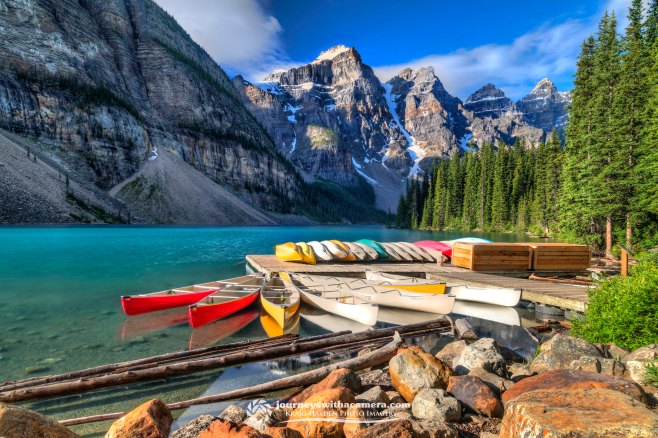
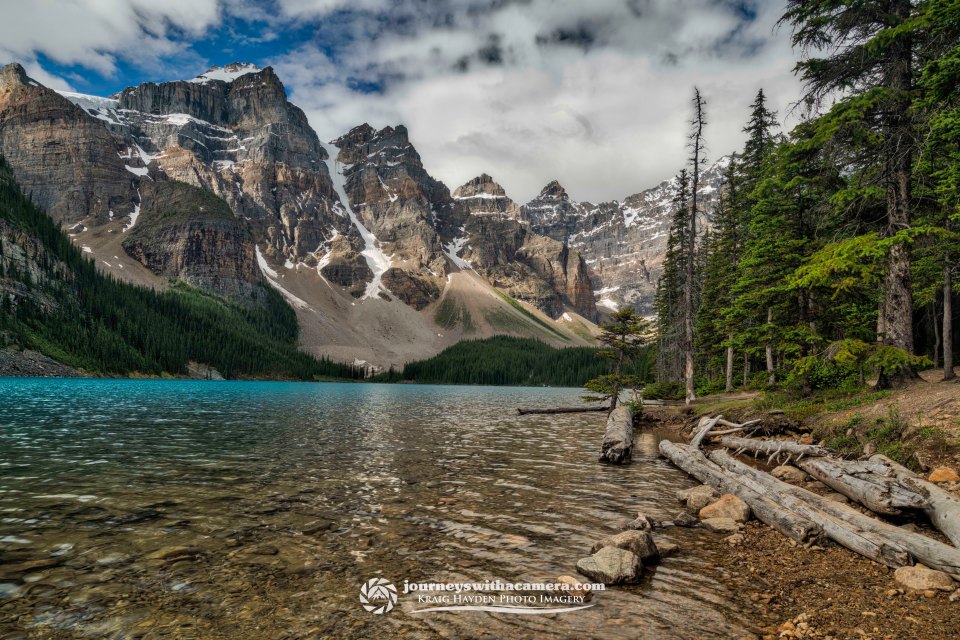
- Moraine Lake – This is adjacent to Lake Louise. Louise gets all the attention, but Moraine might be the better experience if you’re not staying at the hotel. If you’re into photography, there is much more to see and photograph here. Getting to Moraine requires a 7 mile drive up narrow mountain roadway. The road is closed October through May and becomes a cross country ski trail.
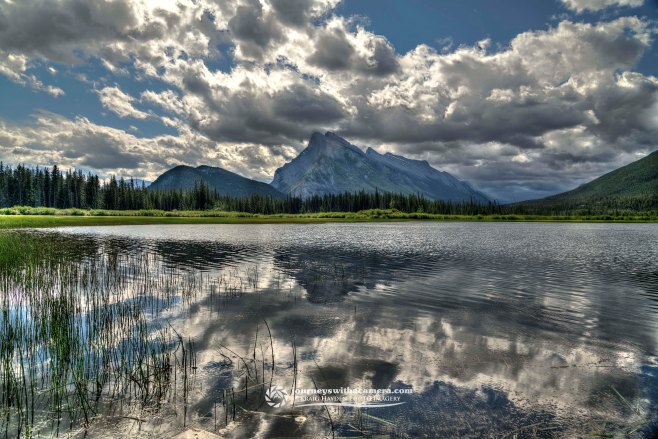
- Vermillion Lakes – These two shallow lakes are essentially wetlands nestled at the base of Mt. Rundle and are located just outside the town of Banff. It’s somewhat hidden, and as such a less crowded. This might have been my favorite location on the trip. 30 minutes sitting alone on a small dock overlooking the lake was just the stress reliever I needed.
- Bow Valley Parkway – This is a scenic drive just off the Trans-Canada Highway. It starts in the town of Banff and ends at Lake Louise Drive. Take your time, drive slow, enjoy the scenery and keep and eye out for the critters.
- Lake Minnewanka – The lake is the largest in the Canadian Rockies and is a popular spot for boating, hiking, biking and picnics along the shores many parks. The easiest access is off Highway 1 near the town of Banff.
Important Notes:
- Park Pass. Everything inside the national park boundary requires having a park pass. This includes traveling Highway 1 and the Bow Valley Parkway. If you are spending more than a few days, get the annual pass. It is currently good for two years and covers all Canadian National Parks. Additional fees apply for camping and fishing.
- Bear spray. It’s both an investment and an insurance policy. The stuff is about $50 a can and they sell it at the tire store among other places. That’s a lot for something you hope you don’t need and can’t take back with you on an airplane. If you going to hike off the main road you probably want it. I chose to stay closer to my car.
What were your experiences in Banff? Feel free to share in the comments section.

 Journeys With A Camera